Of all the spots on entire property, the centuries old hemlock forest rising above Black Creek is our favorite. Pines one hundred feet high rise into the sky like a cathedral, with a soft carpet of needles beneath our feet.
In so many ways it’s the perfect camping spot, but we learned about a hidden danger the hard way.
After a weekend camping in the pines, we were extra careful to leave no trace. Several buckets of water were hoisted up from the creek to extinguish the last of the fire. And when all was drenched and cool, we added a few more buckets to be sure.
But what looked like a completely extinguished fire ended up smoldering three feet below the pine needles, unseen and undetected, for nearly a full month. When it finally re‑emerged, it burned hot enough underground to kill four massive hemlock trees, destroying their roots from below. We were incredibly lucky to catch it before it turned into a full‑scale forest fire.
This article explains why fires are so dangerous in pine forests, how underground fires happen, and what every camper, landowner, and outdoor enthusiast needs to know to prevent a disaster that can smolder silently for several weeks.
Why Pine Forests Are Especially Vulnerable to Fire
Pine forests are beautiful and smell great, but they are also extremely flammable. The characteristics that make them so pleasant are also what makes them dangerous.
1. Pine Needles Create a Perfect Fuel Bed
Pine needles fall continuously and accumulate year after year, forming thick, springy mats on the forest floor. These needle beds:
- Dry quickly after rain
- Ignite easily from embers
- Burn slowly and quietly when compacted
Unlike leaves that decompose quickly, pine needles can build up into layers several feet deep, especially in undisturbed areas.
2. Resin and Pitch Increase Fire Intensity
Pine trees contain natural resins and pitch that are highly flammable. Once ignited, these compounds burn hotter and faster than many other forest fuels. Even a small spark can become a sustained ignition source.
3. Fire Can Travel Underground
This is the most dangerous and least understood aspect of fires in pine forests.
While flames may disappear on the surface, heat can continue moving underground through:
- Compacted pine needles
- Decaying roots
- Organic soil layers
- Peat‑like forest duff
These slow‑burning fires are often called ground fires or smoldering fires — and they are extremely difficult to detect.
Our Story: The Fire Wasn’t Really Out
By the end of our camping weekend in the pines, the campfire was properly contained, managed, and — as far as anyone could tell — completely extinguished. Water was poured on it, ashes were spread, and more water was poured, and the area was checked a final time before leaving. There were no visible embers, no smoke, no warmth.
That we knew of.
But One Month Later…
A section of forest floor suddenly broke open, releasing smoke and heat from below. The fire had been smoldering roughly three feet underground, slowly consuming pine needles, roots, and organic matter.
By the time it surfaced:
- Four enormous hemlock trees were already done for.
- Their root systems had been burned away underground
- The trees died standing, never touched by flames above ground
Had this happened on a windy day — or gone unnoticed for a few more hours — the surrounding pine forest could have ignited rapidly.
We were incredibly fortunate that a neighbor caught it when he did and alerted the town fire department.
That experience created greater appreciation and respect – there’s a lot more to fire safety in the pines than we had realized.
How Underground Fires Kill Trees Without Burning Them
One of the most surprising outcomes of smoldering ground fires is how they kill large, healthy trees.
Roots Burn Before Trunks
Tree roots spread widely near the surface, especially in pine and hemlock forests. When fire burns through organic soil layers:
- Roots are exposed to sustained heat
- Bark insulation is bypassed
- Water and nutrient transport is cut off
A tree can appear perfectly fine above ground while its entire support system is destroyed below.
Delayed Death
Trees affected by underground fires may:
- Die weeks or months later
- Fall unexpectedly due to weakened roots
- Become hazardous snags near campsites or trails
This delayed damage makes ground fires particularly dangerous for long‑term forest health.
Why Smoldering Fires Are So Hard to Detect
Ground fires don’t act like typical campfires or wildfires.
No Flames
Smoldering fires often burn without visible flames, especially when buried under thick layers of needles or soil.
Minimal Smoke
Smoke may be faint, intermittent, or completely absent until the fire reaches oxygen.
Long Lifespan
These fires can persist for:
- Weeks
- Months
- In extreme cases, entire seasons
Rain may slow them down but not extinguish them — especially if the fuel bed is deep.
Weather and Time
Many people assume rain or snow means a fire is fully out. Unfortunately, that’s not always true.
Rain Isn’t Enough
Light or moderate rain often fails to penetrate:
- Deep needle beds
- Compacted duff layers
- Root cavities
Water may cool the surface while embers continue to glow below.
Seasonal Danger
Smoldering fires can survive:
- Fall rains
- Early snowfalls
- Freeze‑thaw cycles
Only sustained saturation or complete fuel removal reliably stops them.
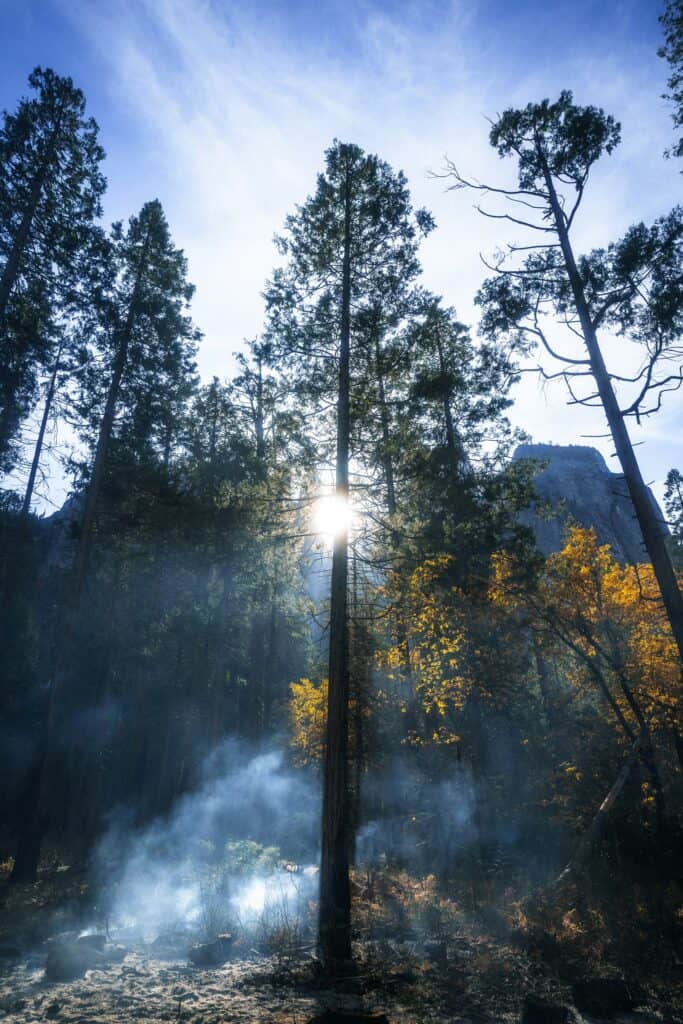
Why One Escaped Fire Can Destroy an Entire Forest
In pine forests, fire spreads vertically and horizontally.
Ladder Fuels
Low‑level ground fires can ignite:
- Shrubs
- Low branches
- Dead lower limbs
Once flames reach the canopy, fire behavior becomes explosive and uncontrollable.
Wind Amplifies Everything
A single gust can:
- Reignite dormant embers
- Spread sparks hundreds of feet
- Turn a hidden problem into a catastrophic wildfire
This is how small, forgotten fires become national news.
Best Practices: If You Must Have a Fire in a Pine Forest
Ideally, avoid open fires entirely in pine forests unless in a designated fire ring. If fires are allowed, follow these precautions strictly.
Choose the Right Location
- Use established fire rings only
- Avoid deep needle beds
- Clear down to mineral soil
Dig and Clear More Than You Think You Need
- Remove pine needles at least 5–10 feet around the fire
- Dig below the needle layer
- Watch for roots — if you find them, move the fire
Extinguish Thoroughly
When you’re done:
- Drown the fire with water
- Stir ashes and coals
- Drown again
- Feel for heat with the back of your hand
If it’s warm, it’s not out.
Never Bury Hot Ashes
Covering embers with soil or needles traps heat and encourages smoldering.
Lessons Learned the Hard Way
That underground fire taught us something no sign or warning ever could: fire doesn’t follow our assumptions.
Just because flames are gone doesn’t mean danger is.
Just because time has passed doesn’t mean risk has.
Four massive hemlocks died without ever catching fire above ground — silent proof of what was happening beneath our feet.
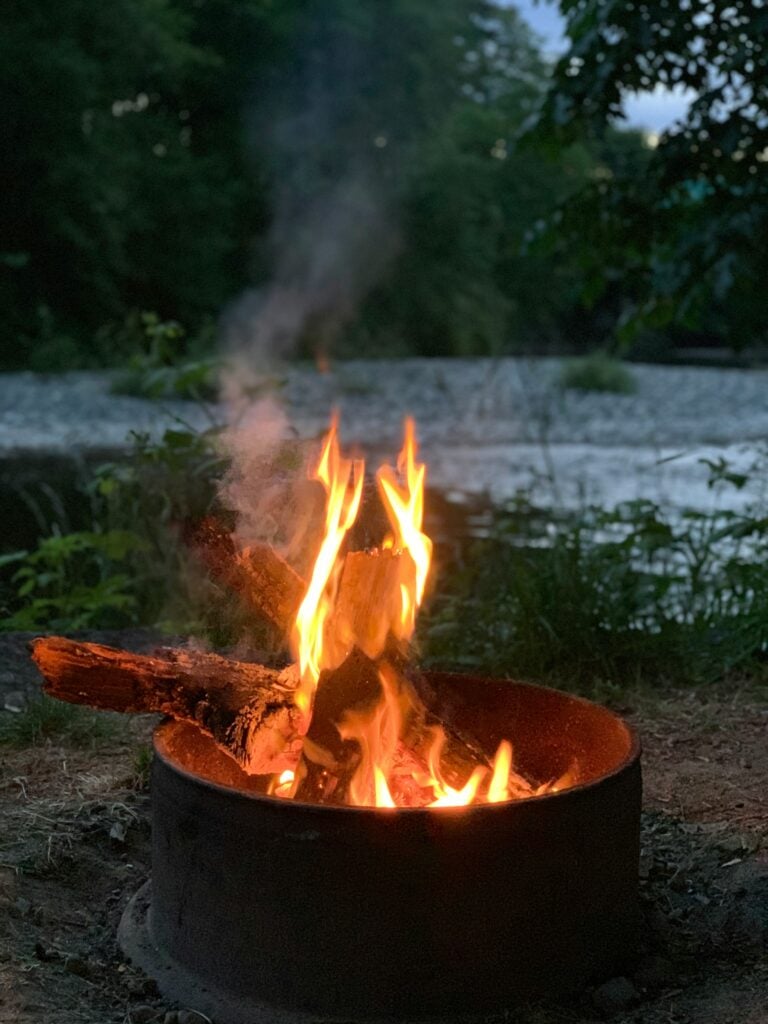
Final Thoughts
Fires in the great outdoors are special events, but fires anywhere near pine forests demand extra respect. The combination of flammable needles, hidden fuel, and underground spread creates a risk most people aren’t completely aware of.
A fire you can’t see may be the most dangerous fire of all.
We still enjoy are pines, but we have a new respect for the added need for fire safety. We thought we were being careful, but now we have a greater understanding of what isn’t easily seen. Lesson learned. Today we’re better equipped to make sure our forests and the people who love them are here for generations to come.

Frequently Asked Questions About Fires in Pine Forests
Can a campfire really smolder underground for weeks?
Yes. In pine forests, thick layers of needles, organic soil, and decaying roots can allow fires to smolder underground for weeks or even months. These fires burn slowly with very little oxygen and may show no visible flames or smoke until they resurface.
How deep can an underground forest fire burn?
Smoldering ground fires can burn several feet below the surface. In areas with deep pine needle buildup or organic duff, heat can travel downward through compacted material and root systems, making the fire extremely difficult to detect or extinguish.
Can underground fires kill healthy trees?
Absolutely. Underground fires can burn tree roots long before flames ever reach the trunk. When roots are destroyed, the tree loses its ability to transport water and nutrients, leading to delayed death — even if the tree never appears burned above ground.
Will rain or snow put out a smoldering ground fire?
Not always. Light to moderate rain or early snowfall may cool the surface but fail to penetrate deep enough to extinguish embers below. Only sustained soaking or complete removal of burning material reliably stops underground fires.
Is it safe to have a campfire in a pine forest?
It can be, but only under the right conditions. Fires should be built only in established fire rings, cleared down to mineral soil, and fully extinguished with water and stirring. In many pine forests, especially during dry seasons, avoiding open fires entirely is the safest choice.
What’s the biggest mistake people make with campfires in pine forests?
The most common mistake is assuming a fire is out just because flames are gone. Burying hot ashes or failing to dig below pine needles can trap heat underground, allowing a fire to smolder long after everyone has left the area.
.
.
.
Photo by Juli Kosolapova on Unsplash
Photo by Maciek Sulkowski on Unsplash
Photo by Alex Moliski on Unsplash
Photo by Jacob Stone on Unsplash
Photo by Fernando Jorge on Unsplash