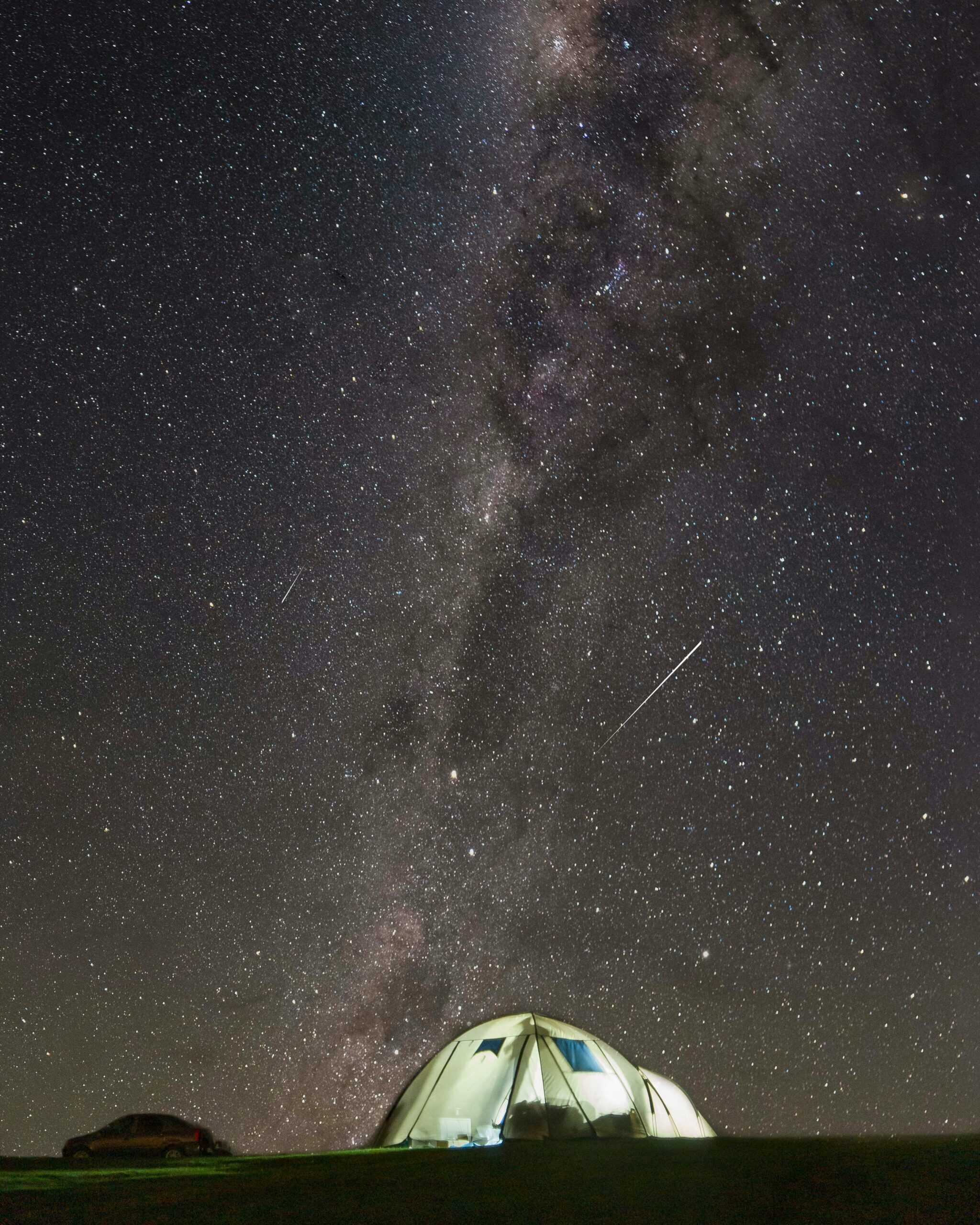
A Summer Viewing Series · Special Event · Three Nights Only
Every August, for a handful of nights, the sky puts on a spectacular show: the Perseid Meteor Shower. And when you’re staying at a private park tucked into the rolling foothills of the Alleghenies—far from streetlights, close to deep woods, and surrounded by quiet—it’s an experience worth remembering.
Here is an invitation to reserve the perfect place, at the perfect time, for one of summer’s most iconic celestial events. A three-night viewing window, designed for guests who want the full ritual: firelight, pine-scented air, a short walk into an open field, and the sky doing what it’s done for thousands of years.
A Private Park, Perfectly Placed
McMahon Park sits in the Allegany foothills, a landscape of soft ridges, open fields and valley horizons. It’s close enough for an easy trip and far enough removed that darkness still feels complete. Nearby landmarks like Letchworth State Park and Stony Brook State Park capture the night skies this region is known for—but at McMahon Park there are no crowds, no parking lots glowing in the distance, and no need to pack up and leave when the best part begins.
When night falls, the park goes quiet in the way that only rural places can. The kind of quiet where you hear the fire settle, an owl call once, and then nothing at all.
Then the sky takes center stage.
The Perseid Meteor Shower: Summer’s Signature Event
The Perseids mean nights filled with ‘shooting stars’.
They are fast, bright, and often—leaving glowing trails that hang in the air for a second or two after they pass. On peak nights, under dark skies, you might see dozens per hour.
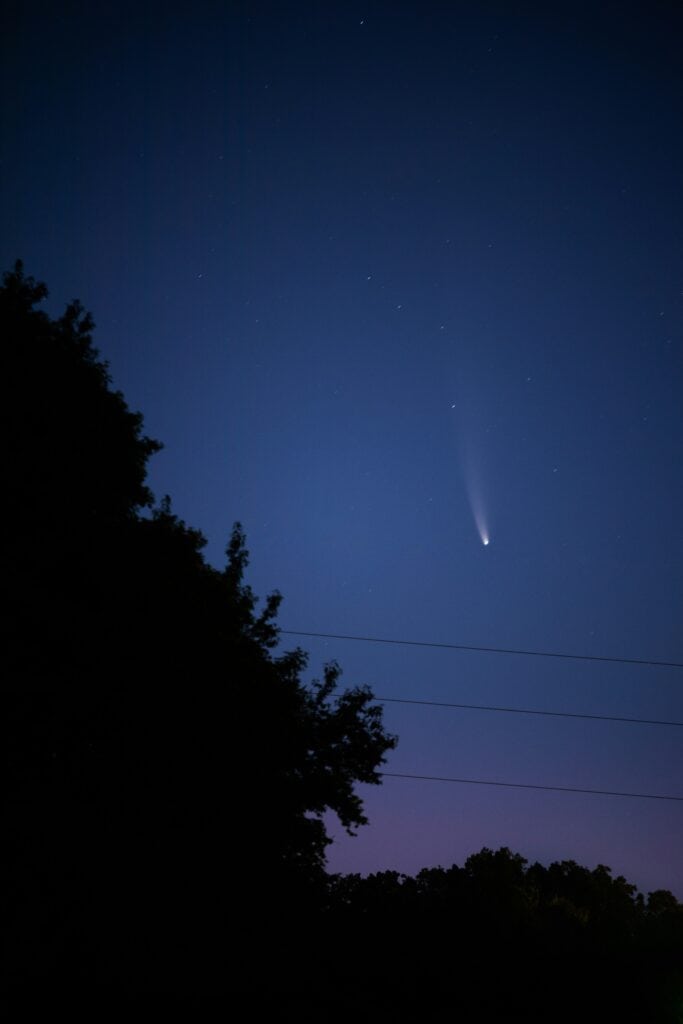
The Perseids happen every year in mid-August, when Earth passes through a wide stream of debris left behind by Comet Swift–Tuttle. Tiny grains of comet dust slam into our atmosphere at incredible speeds, burning up in flashes of light we call meteors—or shooting stars.
What makes the Perseids so beloved isn’t just their reliability. It’s their timing.
- Warm summer nights
- School-free, vacation energy
- Darkness that holds onto summer warmth
- Meteors that appear all over the sky
This is the shower people remember seeing as kids, lying on blankets, counting streaks, making wishes.
Some History
The Perseids have been observed and written about for over 2,000 years.
In medieval Europe, they were sometimes called the “Tears of St. Lawrence”, because their peak often falls near August 10th, the feast day of Saint Lawrence. Long before telescopes or scientific explanations, people noticed that this particular time of year brought fire in the sky year after year and generation after generation.
Standing in an open field today, watching those same streaks of light, it’s an opportunity to feel connected to the long human tradition of looking up and connecting with the wonders of the Universe.
McMahon Park Is an Ideal Place to Watch
The park offers:
- Minimal ambient light: No streetlamps, no traffic glow, no nearby development
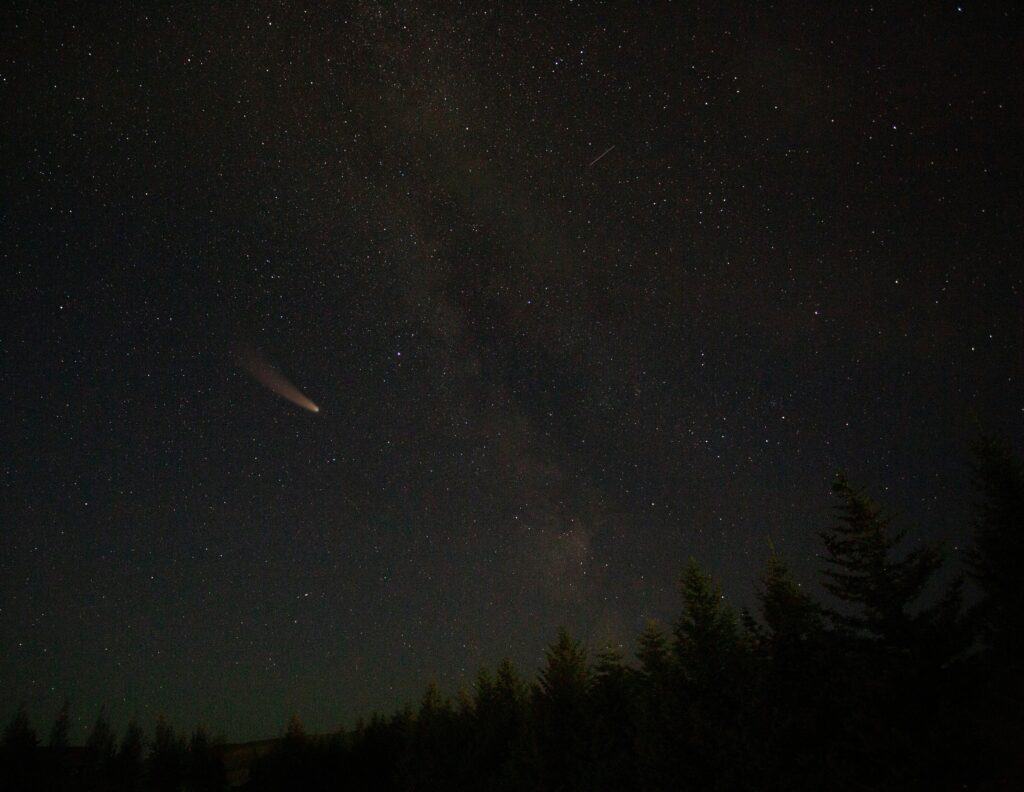
- Open viewing areas: Fields with wide horizons, framed by pines and hardwoods
- Overnight access: No rushing home when the sky gets good
- Comfortable glamping accommodations: Watch late then sleep well.
Here, you’re part of a rural environment perfect for a star show summer night.
A Perseid Night
The evening begins at the fire pit. Dinner’s done. The flames are steady but low. Someone mentions the sky already looks different —darker, deeper.
You hang out. You talk. You connect.
Around 10 or 11 p.m., you notice the first one: a quick streak, gone almost before you’re sure it was really there.
You grab a blanket. Maybe a flashlight held low. The path is familiar now—a short walk through the pines, needles soft underfoot, the air cool and clean. The trees open into a wide, grassy field, perfectly positioned for sky watching.
You settle in. The stars sharpen as your eyes adjust. The Milky Way might appear as a pale, smoky band overhead.
Then the show goes full tilt.
Some meteors are quick slashes. Others are bright and slow. Time is irrelevant.
It’s a moment you can sink into and take with you.
A Three-Night Affair
The Perseids take their time—they build, crest, and slowly taper off. The Summer Viewing Series spans three nights.
Staying multiple nights means:
- No troubles if clouds roll in one night
- You can watch at different hours (late night and pre-dawn)
- You relax and enjoy the experience instead of rushing
Three nights makes it a life experience and gives the full story.
What to Look For
You don’t need to know constellations or own equipment for this one.
- Perseid meteors can appear anywhere in the sky
- They’re often bright and fast, sometimes leaving glowing trails
- The best viewing is typically after midnight into early morning
Lie back. Look wide. Try not to look at your phone between streaks—your eyes need darkness to stay tuned in.
Oh, and make a wish!
The Kind of Experience People Talk About
Years from now, you probably won’t remember what you streamed that week in August.
But you will remember:
- the sound of the fire settling
- the smell of pine in the dark
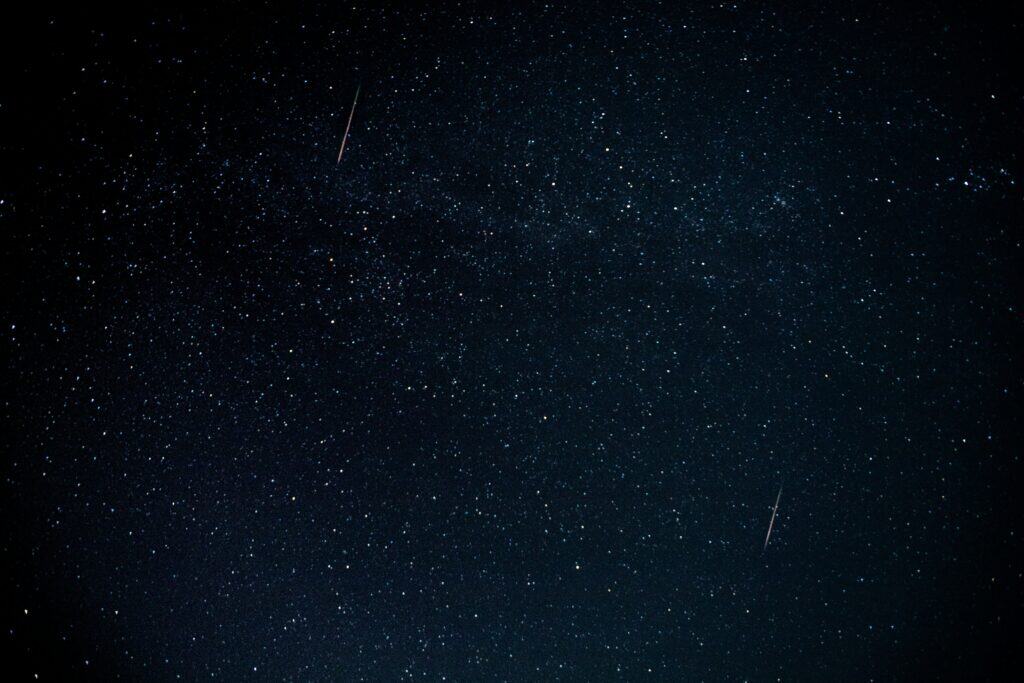
- the shock of a bright meteor tearing across the sky
- the feeling that, for a little while, you were exactly where you were meant to be
That’s the power of the Perseids—especially when you give them the setting they deserve.
Reserve the Sky
The Perseids Summer Viewing Series. Three nights. A rare alignment of place and sky.
Book early via the Contact page – book the Wheelhouse, the Shawmut, and, soon, our creek side glamping dome!
And may you always remember to look up!
Photo by Sanath Kumar on Unsplash
Photo by benjamin lehman on Unsplash
Photo by Chris Henry on Unsplash
Photo by Idin Ebrahimi on Unsplash
Photo by Dayne Topkin on Unsplash