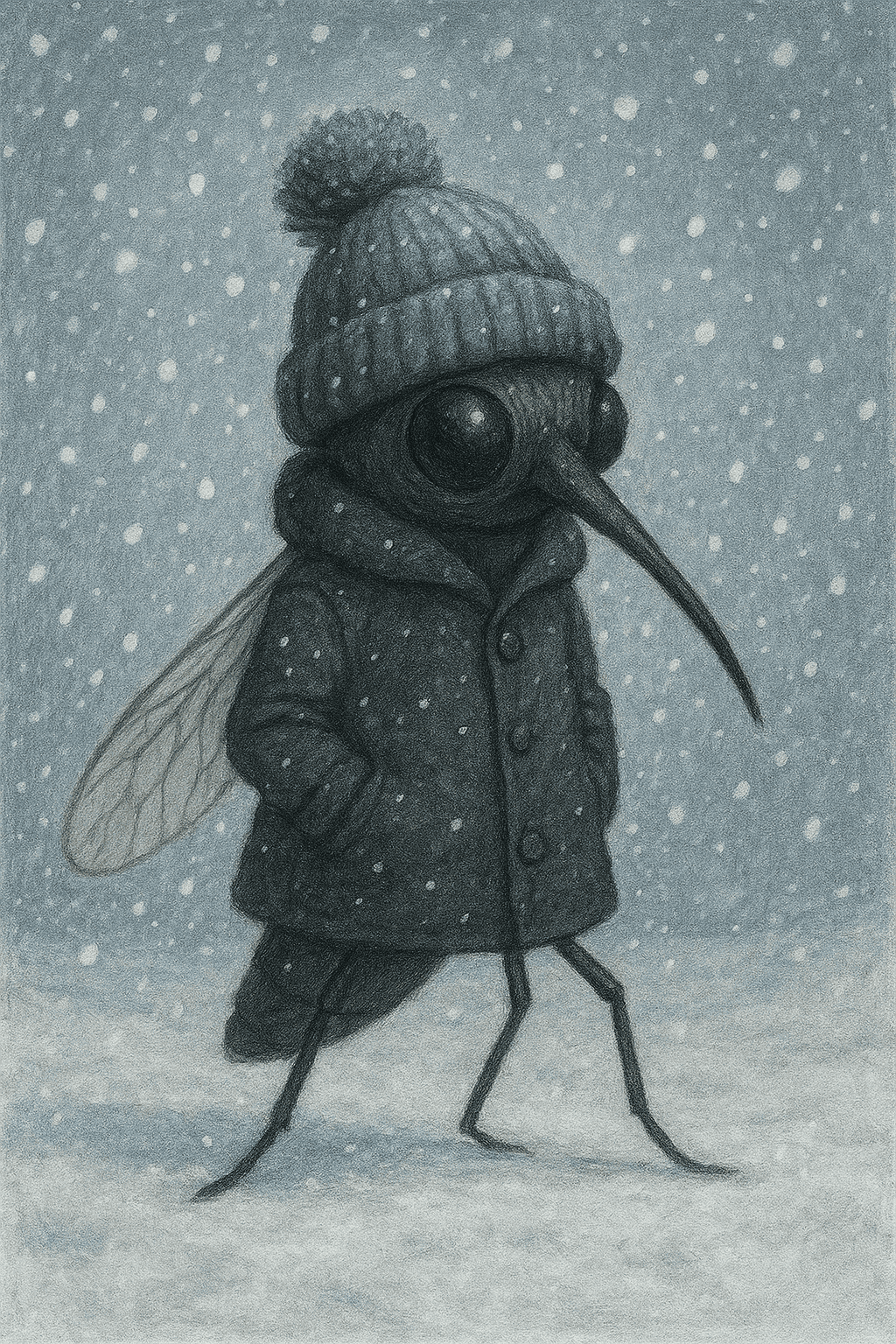
As winter settles in, we’re already prepping for next glamping season. Shopping on-line for the coolest glamping tents and screen houses for our new creek side site we begin to wonder: where are those nasty mosquitos and biting flies now anyhow?
Do they die? Do they freeze? Or are they just chillin until the warm weather returns?
Unfortunately, mosquitoes, black flies, deer flies, and other biting insects have extremely effective strategies for surviving winter—out of sight in hidden corners of forests, wetlands, and your backyard. They’ll be back, but understanding their winter survival tactics can help you manage them a little better when warm weather returns.
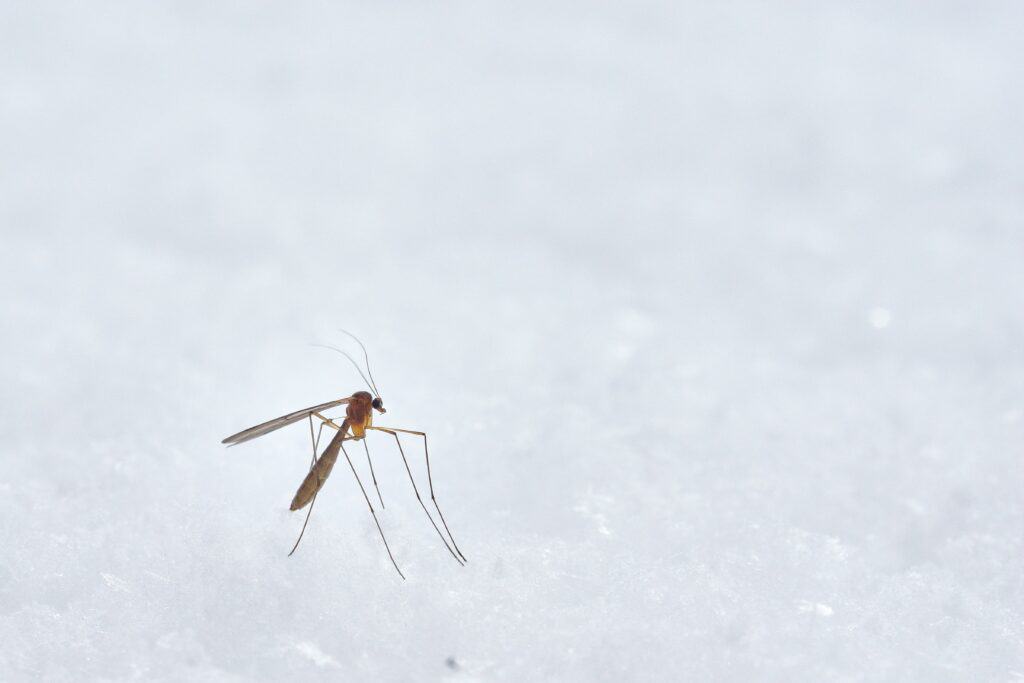
Mosquitoes in Winter: Surviving the Biting Cold
Mosquitoes have been around for over 100 million years, and they’ve evolved with brilliant methods to endure brutal season changes. Their method depends on the species, but all mosquitoes fall into one of a few survival strategies.
1. Some Mosquitoes Hibernate as Adults
Certain species—like those in the Culex group—hibernate through the cold months.
How it works:
- The females get fat in the fall.
- They seek sheltered places like hollow logs, animal burrows, basements, or sheds.
- Their metabolism slows dramatically, letting them survive months of cold.
The males, however, die off before winter (the poor guys). Only the females survive to lay the next generation of eggs in the spring.
These overwintering females are usually the first to bite in early spring, especially on the rare warm day in March or April. If you’ve ever been surprised by a lone mosquito way too early in the year—this is why.
2. Some Mosquitoes Survive as Eggs
Other species, like floodwater mosquitoes (Aedes), survive winter as eggs. These are some of the toughest eggs in the insect world.
What makes the eggs so tough?
- They’re laid in dry areas that will flood in the spring.
- They enter a state of suspended animation known as diapause.
- They can survive freezing solid.
- Some eggs can even survive multiple years if the right conditions don’t occur.
When the spring thaw brings standing water, the eggs finally hatch—leading to a sudden boom in mosquito populations.
This is why cleaning gutters, removing buckets, and reducing standing water in early spring is extrtemely effective. You’re not preventing adult mosquitoes—you’re stopping eggs that could have been sitting there all winter.
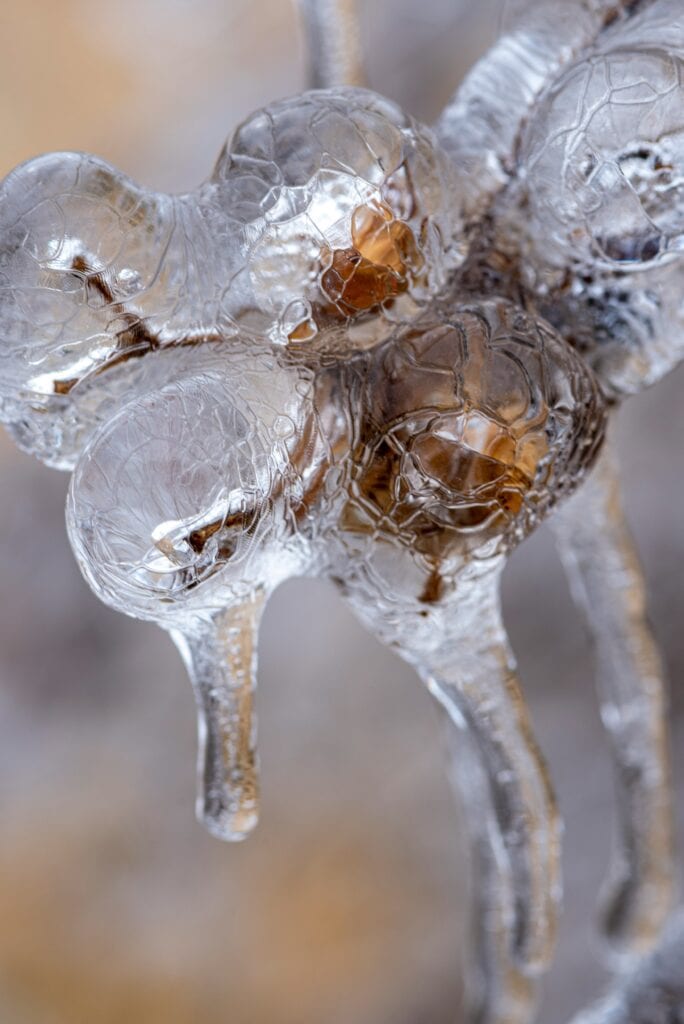
3. Some Mosquitoes Survive as Larvae Under Ice
A smaller number of species overwinter as larvae. They live in water that doesn’t completely freeze to the bottom—ponds, springs, slow-moving streams, or marshy pools.
Even when the surface is frozen, life is still happening below:
- Larvae remain active, though sluggish.
- They feed on micro-organisms.
- They eventually pupate and emerge as adults once temperatures rise.
This is part of why early-spring wetlands can be surprisingly mosquito-heavy: those larvae have been preparing for months.
Do Mosquitoes Die When They Freeze?
This answer depends on the life stage.
Adult mosquitoes:
They cannot survive freezing. If an adult mosquito is exposed to temperatures below freezing for long enough, its body fluids form ice crystals and it dies very quickly.
That’s why hibernating mosquitoes don’t hide outside—they shelter in places that stay above freezing.
Eggs:
Mosquito eggs are the toughest stage, and many species’ eggs survive being frozen solid. They’re designed this way, especially in northern climates. The egg doesn’t rupture the way an adult’s soft tissue would.
Larvae:
Larvae generally survive cold but not freezing. They need to be in a heated pocket of water deep enough to avoid complete freezing.
Black Flies in Winter: Hidden in Streams
Black flies plague campers, hikers, and anyone living near moving water in the spring. Their life cycle is tied closely to streams and rivers—and that shapes how they handle winter.
Where Black Flies Go in the Winter
Black flies survive the winter primarily as larvae attached to rocks in running water. Unlike mosquitoes, black flies need oxygen-rich, moving water, so they don’t overwinter as eggs in dry areas.
They use silk-like anchor threads to cling to submerged stones even through snowmelt and freezing temperatures above the waterline.
Do They Freeze?
Black fly larvae typically do not freeze, because:
- Water rarely freezes all the way to the bottom of flowing streams.
- Even when ice forms on top, the water below remains liquid.
Larvae remain dormant or slow-moving until spring.
What Happens Next?
As water temperatures rise:
- Larvae begin feeding and growing quickly.
- They pupate in underwater cocoons.
- They emerge in massive synchronized hatches.
This is what creates the notorious “black fly season” in May and June.
Because they overwinter as live larvae, they are ready to explode in numbers very early in the season, often before mosquitoes even get started.
Deer Flies and Horse Flies: Buried Alive!
Deer flies and horse flies are inland cousins of black flies—larger, louder, and equally annoying. Their winter strategy is one of the most interesting.
How Deer Flies Overwinter
These flies survive the cold as large larvae buried in mud, often in:
- Marshes
- Wet meadows
- Swamps
- Shoreline soil
They can burrow deep enough to avoid lethal freezing temperatures.
These larvae are carnivorous and may continue to feed slowly through winter, depending on the temperature.
Can They Survive Freezing?
If the soil freezes too deeply, larvae near the surface die. But in most climates:
- Soil below the frost layer stays unfrozen.
- Snow cover acts as insulation.
- Moist, organic mud creates warmth from decomposing material.
So most larvae survive.
In early summer, they pupate and emerge as the biting deer flies that circle your head in humid weather.
Why Don’t They Just Freeze to Death, For Goodness Sake?
Many insect species have evolved natural antifreeze compounds—glycerol and similar chemicals—that reduce freezing inside their bodies.
But this protection only works for:
- Eggs
- Larvae
- Pupae
Adult mosquitoes and adult biting flies lack this protection.
That’s why you can’t freeze a mosquito in your garage and expect it to survive. But the eggs sitting in a dried-up bucket outside? They’ll be just fine until spring.

Why Understanding Winter Survival Helps With Control
Knowing where biting insects go in the winter gives you power to reduce their numbers around your campsite, backyard, or homestead.
1. Remove Standing Water in Fall and Early Spring
You’re destroying eggs before they hatch.
2. Clean Out Gutters
Mosquito eggs love it up there.
3. Manage Marshy Areas
Fill depressions, improve drainage, or add small-scale aeration to ponds.
4. Control Compost and Manure Piles
This impacts stable flies more than mosquitoes, but still helps.
5. Protect Stream Edges if You Want to Reduce Black Flies
Trimming heavy vegetation can reduce larval hiding spots, though moving-water insects are much harder to control without affecting ecology.
6. Use Early-Season Treatments (like BTI)
BTI dunks placed in standing water in early spring target larvae that survived winter.
So Are They Really Gone in Winter?
Not exactly. They’re just waiting.
Mosquitoes and biting flies don’t roam around in the cold, but they’re still very much alive in some form—protected in mud, frozen egg clusters, streams, burrows, or man-made containers.
When spring arrives, they emerge almost immediately because their overwintering cycle puts them right on the starting line.
So we will keep on shopping for that screen house and be ready to combat the buggers in the Springtime. And for now we will bundle up and enjoy this bug free winter wonderland.
.
.
.
Photo by Wolfgang Hasselmann on Unsplash
Photo by Alexandros Giannakakis on Unsplash