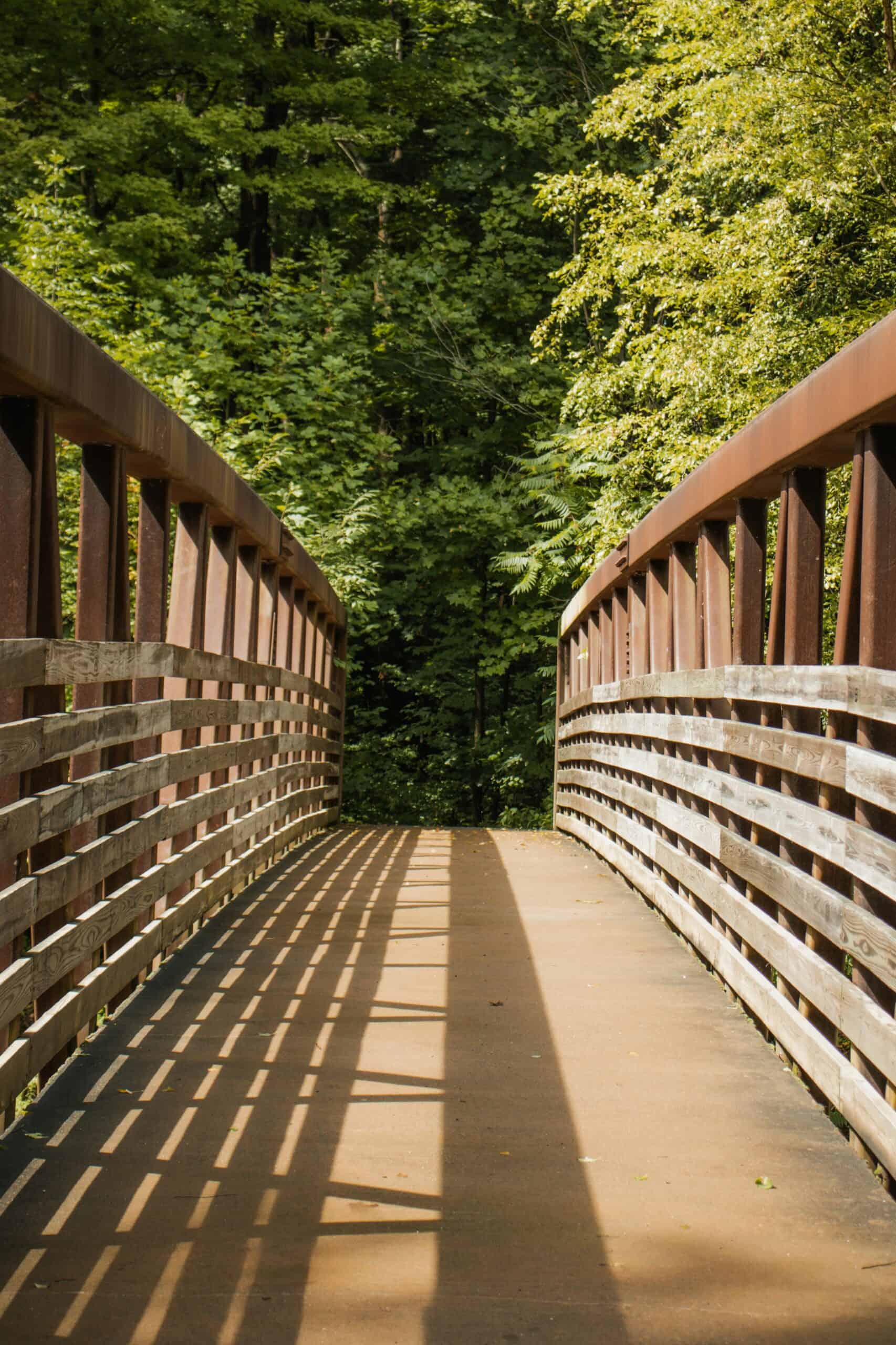
With the glamping season all but over, it’s time to set our sites on plans for the future. And on the top of our wish list is to finally build a walking bridge across Black Creek.
On the other side of the creek (we call it the ‘crick’ out here in the country)is a beautiful Hemlock forest and the perfect spot for treehouses!
But to build a bridge that will be safe and in compliance with a ton of regulations, where do we learn what is really needed to get started? We’re envisioning a simple footbridge across a 30-foot creek, but between stream rules, structural safety, site conditions, and local building rules there are a lot of pieces to get right.
This blog is a practical overview of what you need to start— permits, professional help, design basics, and construction considerations. As a bonus, there are links to relevant government web pages for your convenience (specifically for Allegany County NY, but many regulations are universal).
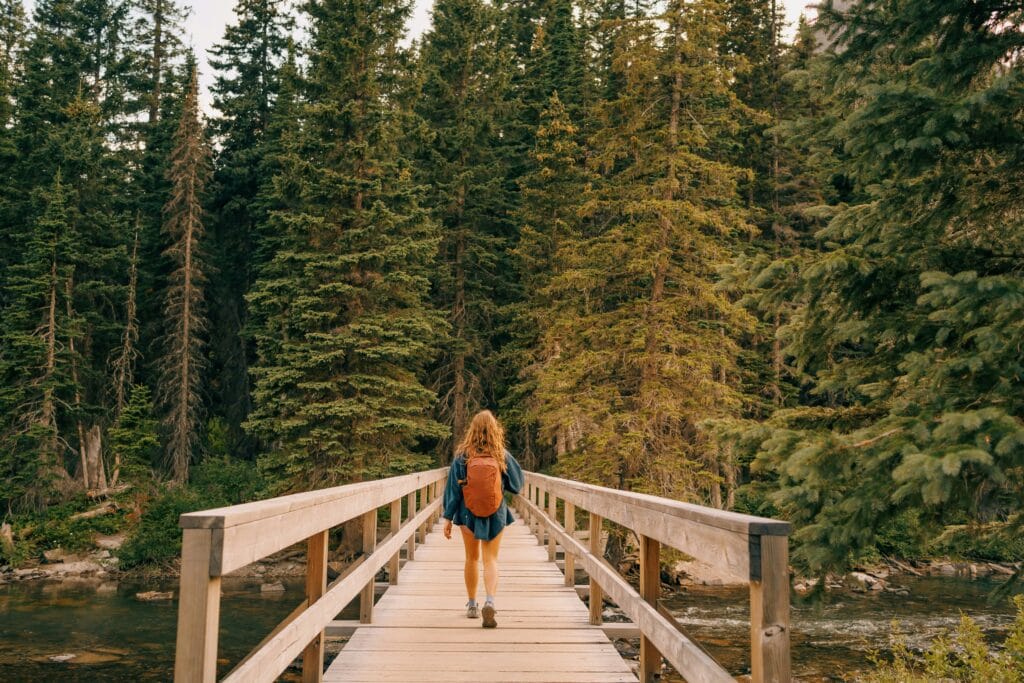
1) First step: decide scope (private vs public, temporary vs permanent)
Before anything else, decide whether the bridge will be:
- On private property for personal use only (e.g., access across your own creek), or
- Serving the public/providing access from or to public right-of-way (even a trail you plan to open to others).
That matters because public or municipal projects have stricter accessibility, insurance, and permitting requirements. Even on private land, many environmental and federal/state permits still apply if you work in or near the stream.
2) Permits & approvals you must consider
a. NYSDEC — stream/stream crossing permits.
Any work in or that disturbs a stream bed or stream banks in New York usually needs NYSDEC authorization. DEC issues general permits that cover typical stream-crossing work but you have to confirm whether your project fits the general permit or requires an individual permit. You don’t want to assume a small bridge is exempt — the rules apply to “work in any stream” and there are specific stream-crossing guidance documents. Department of Environmental Conservation+1
b. Freshwater wetlands and wetland mapping.
If your footprint touches mapped freshwater wetlands, you may need a freshwater wetlands permit as well. DEC has informational wetland maps and the permitting thresholds depend on how much wetland is affected. Department of Environmental Conservation
c. U.S. Army Corps of Engineers (Section 404/“waters of the U.S.”).
If the creek or area is considered waters of the United States, the Army Corps may require a permit (dredge/fill permits) or you may qualify for a regional/general permit. You will want to check the New York District regulatory pages. nan.usace.army.mil+1
d. Local building permits & design professional stamp.
In many towns, plans for bridges or substantial structures must be prepared or stamped by a registered New York design professional (engineer) before submitting. It’s a good idea to contact your town’s building & zoning office early. Town & Village of Allegany, NY+1
e. Floodplain / FEMA / county rules.
If the proposed bridge or abutments are in a mapped floodplain, you’ll need to follow floodplain development rules; the DEC general permit documents and county planning materials tie into flood risk guidance. There are often additional siting or structural requirements in flood zones. Ext Apps DEC NY+1
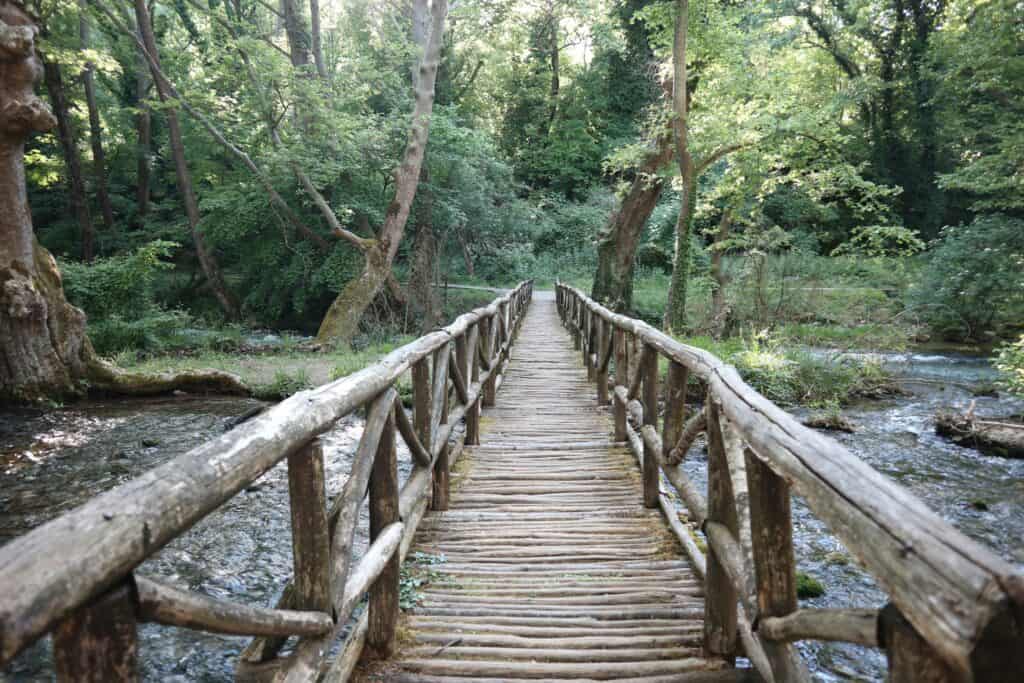
3) Who should you involve
- Surveyor: to establish property lines, creek centerline, and elevations.
- Licensed Civil/Structural Engineer: for spans around 30 ft, an engineer should size beams, footings, scour protection and provide stamped plans for permits and safe construction. Many towns require a stamp. Town & Village of Allegany, NY
- Environmental consultant or DEC contact: to determine if wetlands or protected stream channels are present and whether DEC general permits apply.
- Contractor (or specialized bridge company): for complex spans, prefabricated pedestrian bridges or timber/steel erection. Even if you DIY, consult a contractor for cost & constructability.
- County/town highway or planning office: if any access or work affects a county road, right-of-way, or if you need a driveway/road permit.
4) Design basics for a 30-foot pedestrian bridge
A typical small walking bridge has these design choices and issues:
Span & geometry
- A 30-foot clear span is in the sweet spot where a simple beam bridge (glulam timber beams, steel I-beams, or modular prefabricated pedestrian trusses) is practical. Longer spans need trusses or more complex support.
- Decide clear span (distance between abutments) vs. total length (including ramps/approaches).
Loads
- Design for pedestrian loads (IBC/ASCE standards) and any maintenance vehicle or emergency-vehicle loads you expect — if a quad or small utility vehicle will cross, tell the engineer.
Deck width
- For single-user trails, 3–4 feet minimum; for two-way pedestrian traffic or ADA access, 5–6+ feet. If public/ADA accessible, follow state/federal accessibility guidance. New York State DOT+1
Guardrails and handrails
- Required for any deck more than 30 inches above grade in many codes; height and infill rules apply. Use code-compliant designs (engineer or code official will confirm).
Foundations and scour
- Abutments must be sized for local soil, frost depth, and flood/scour. Many failures occur at foundations, so the footing design is essential. Consider rock anchors, spread footings, or driven piles depending on soil.
Materials
- Pressure-treated timber or glulam: attractive, relatively easy to work with — needs maintenance and design for rot and insect exposure.
- Weathering steel or galvanized steel: durable, less maintenance for long term.
- Prefabricated aluminum/composite pedestrian bridges: quicker install, lightweight, corrosion resistant.
Choice depends on budget, aesthetic, maintenance appetite, and permit constraints.
Erosion control
- Use inlet/outlet erosion protection and bank stabilization (riprap, native vegetation mats, coir fiber rolls) to prevent undermining during high flows.
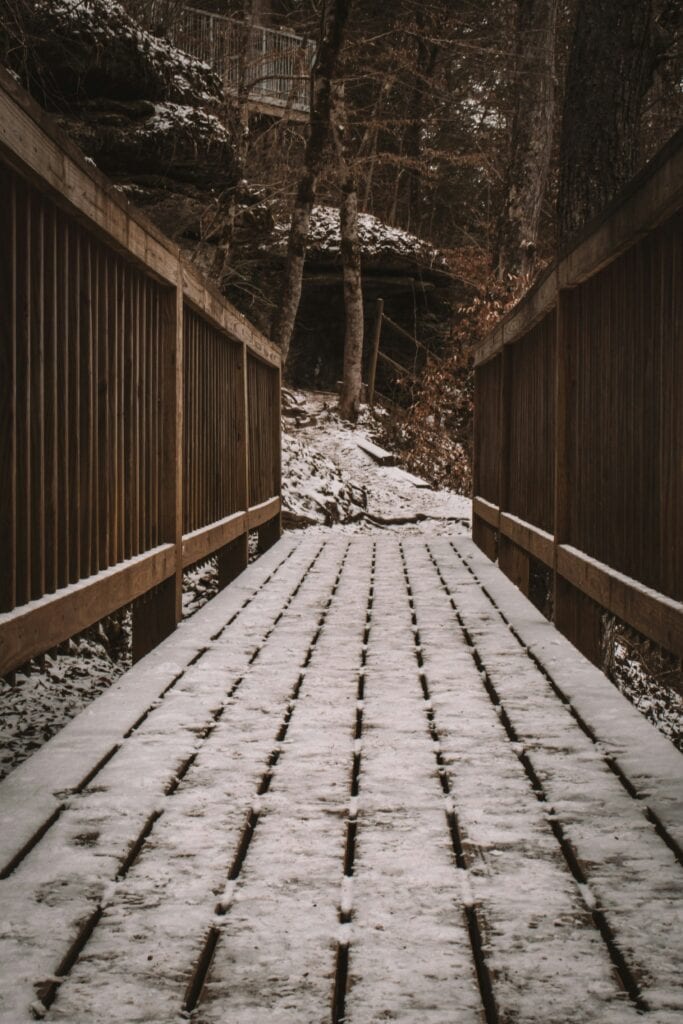
5) Environmental & seasonal considerations
- Timing: Some permits or general permits restrict in-stream work during fish spawning or high flow seasons — check DEC timing windows. Department of Environmental Conservation
- Vegetation: minimize tree/vegetation removal to reduce erosion; use native plantings after construction.
- Stormwater & sediment control: install silt fences, turbidity controls, and follow the erosion & sediment control plan required by permits.
6) DIY vs hiring a pro
- DIY: feasible if you’re building a small, simple, short timber footbridge on stable banks, and you confirm no complex permitting is required. Even then, consult an engineer for footing and beam sizing — that single step reduces risk.
- Hire pros: if public access, floodplain/wetlands involved, abutments require deep foundations, or if you expect vehicles on the bridge. A contractor experienced in pedestrian bridges will handle permits, inspections, and engineered plans.
7) Cost drivers (what will eat your budget)
- Foundation type (simple shallow footings vs piles).
- Material (pressure-treated timber is cheaper; steel/composite costlier but lower maintenance).
- Site access — bringing equipment into a remote area or steep bank adds cost.
- Professional fees (engineer, surveyor, permit application).
- Environmental mitigation (riprap, plantings, silt control).
Rather than quote a hard number, get 2–3 contractor estimates once you have stamped plans.
8) Practical checklist before you start
- Confirm property boundaries & setback rules (get a survey).
- Contact your town building office in Allegany County to learn application requirements and whether stamped plans are required. Town & Village of Allegany, NY
- Contact NYSDEC to determine whether your project fits a general permit or needs individual review; check freshwater wetland maps. Department of Environmental Conservation+1
- Check with the U.S. Army Corps New York District about 404/permit needs. nan.usace.army.mil
- Retain a licensed engineer for design and for any required stamped plans. Town & Village of Allegany, NY
- Prepare erosion & sediment controls and a vegetation plan for post-construction.
- Schedule construction during appropriate low-flow season windows and after permits are obtained.
9) Where to look for official guidance & help
- NYSDEC Stream Activities General Permit and the DEC stream-crossing guidance pages (start here for environmental permit questions). Department of Environmental Conservation+1
- US Army Corps Regulatory Program pages for permit requirements in NY. nan.usace.army.mil
- Your local Town/County building & zoning office (plans and building permit process). In Allegany County/Town of Allegany the Uniform Code applies and many towns require stamped plans. Town & Village of Allegany, NY+1
Final thoughts
A 30-foot creek crossing is very doable and can be an attractive, long-lasting addition to a private glampsite trail — but not a project where you want to “wing it.” The most common trouble spots are inadequate foundations, neglecting permits (which can stop a job or require removal), and failing to design for scour and floods. Start with a survey, talk to your town and NYSDEC, get an engineer’s stamped plans if required, and then price installation options (prefab span vs site-built timber). That approach keeps you legal, safe, and much less likely to have a bridge you need to rebuild after the first big storm.
Any ideas or suggestions? Comments are always welcome!
.
.
.
Photo by Sydney Moore on Unsplash
Photo by Brice Cooper on Unsplash
Photo by Globelet Reusable on Unsplash
Photo by Kiriakos Verros on Unsplash