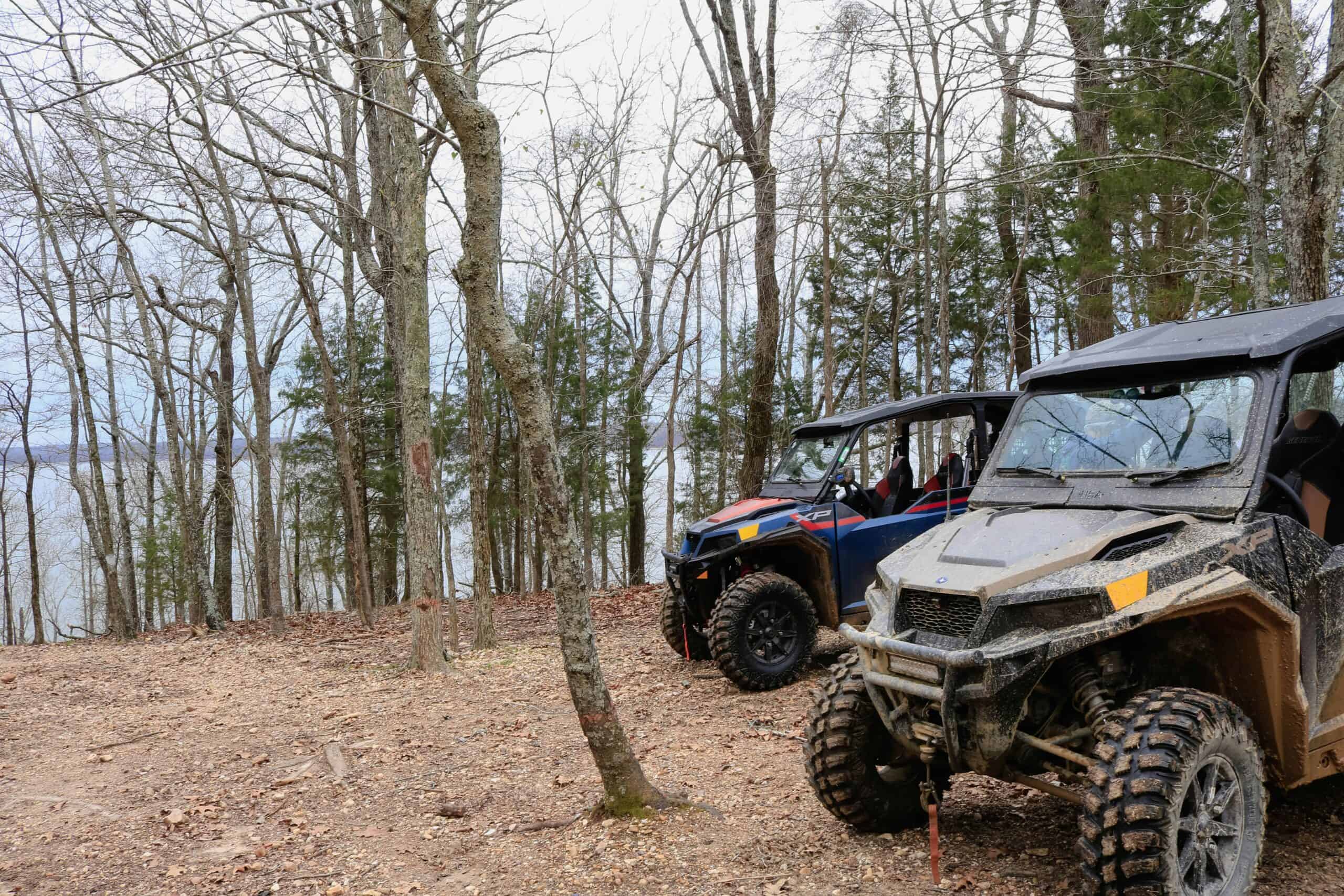
A few weekends ago we went to a side by side poker run (sponsored by the Birdsall Inn, a watering hole and restaurant a mile from our campsite – we highly recommend it!). Almost 500 machines thundered over dirt roads, meeting up at designated spots and raising money for childhood cancer research. An incredible day and so much fun! Now we’re sold on the idea of finding a machine that can thrash on trails but also be a practical and useful addition when managing our campsite. Hauling firewood, checking on guests, accessing parts of the property that are far off and hard to get to on foot (side by sides love mud!).
So we’ve been riding with friends, doing research, and deciding if a side-by-side (UTV) will make our campsite management life easier.
Side-by-sides (aka utility terrain vehicles or UTVs) are rugged, many use machines meant for both work and play. But are they really worth the investment for a campground owner? In this post, we’ll go over the pros, cons, and considerations when deciding.
What Is a Side-by-Side?
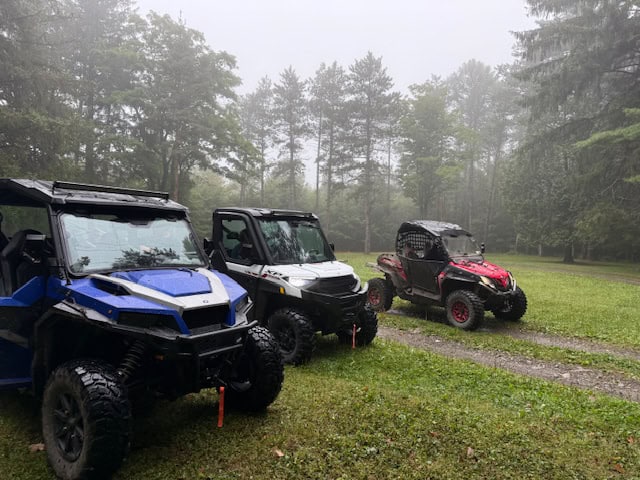
A side-by-side is an off-road vehicle with seating for two to six people, usually with a roll cage, cargo space, and four-wheel drive. Unlike ATVs (which usually have one rider sitting on a straddle seat), side-by-sides have a steering wheel, seat belts, and often have a small bed for hauling.
They’ve become popular among hunters, farmers, and outdoor workers because they can handle rough terrain while carrying tools, supplies, or passengers. For campgrounds, they can serve as both a workhorse as well as a fun perk.
The Benefits of a Side-by-Side for a Campground
1. Efficiency in Daily Operations
If you have several acres to manage, walking everywhere isn’t always realistic. A side-by-side lets you:
- Check on far-off campsites quickly.
- Deliver firewood and other supplies.
- Respond faster to guests.
- Carry tools and materials for maintenance and building jobs.
They save time and energy, especially during peak season when you’re constantly moving.
2. Hauling Power
Many models come with a small dump bed or towing capability. That means you can move gravel, woodchips, trash, or construction materials without needing a full-sized truck. For campsite improvements—like building trails, maintaining roads, or setting up new units—a UTV is a huge help. Add a winch and it becomes even more useful.
3. Access to Rough Terrain
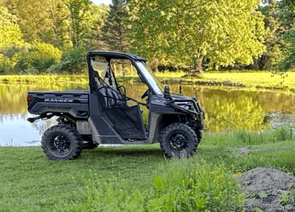
If your campground has steep hills, muddy trails, or wooded areas, a side-by-side can get you places a standard truck can’t. This makes it a good fit for:
- Checking fence lines.
- Maintaining remote tent sites.
- Hauling gear to a secluded part of the property.
4. Emergency Response
In case of a medical emergency or a guest stranded in a remote part of your campground, a UTV lets you to reach them quickly. Some campgrounds outfit their side-by-sides with first-aid kits or stretchers for safety.
5. Fun Factor (With Boundaries)
A side-by-side can add some fun for your family or staff after hours. It’s also possible to build guest experiences around them, like guided tours of your property—but you will want to know and follow local laws, know your liability coverage, and know your insurance requirements.
The Downsides of Owning a Side-by-Side
1. Cost
A new side-by-side can range anywhere from $10,000 to $30,000 or more, depending on the brand and features. Even used models tend to hold their value, so this is not a small investment.
2. Maintenance and Repairs
Like any vehicle, a UTV requires fuel, oil changes, new tires, and occasional repairs. If it breaks down mid-season, you’ll need access to a mechanic familiar with off-road vehicles, which may not always be nearby.
3. Fuel Use
Most side-by-sides run on gas, and frequent use can add up. If you’re driving it daily across your property, fuel costs might be noticeable compared to just walking or using a smaller ATV.
4. Noise
Side-by-sides are louder than golf carts or electric utility vehicles. If you drive one around while guests are enjoying nature, it could interrupt their peace. You’ll want to be mindful of when and where you use it.
5. Safety and Liability
With any motorized vehicle, there’s a risk of accidents. You’ll need to ensure only trained staff (or yourself) operate it. Allowing guests to drive it is usually a bad idea—your insurance provider might not even allow it.
Alternatives to a Side-by-Side
Before investing, consider other options that may fit your campground better:
- Golf Cart: Quieter, cheaper, and perfect for campgrounds with paved or level paths. Not great for hauling heavy loads or handling mud, but excellent for guest-friendly transportation.
- Small Tractor: More powerful for heavy-duty maintenance like grading roads or moving dirt, but not as fast or flexible for everyday use.
- Electric UTV or Cart: Eco-friendly and quiet, though usually pricier up front with shorter range.
Key Questions to Ask Yourself
Before making the purchase, you’ll want to think about:
- Property Size – Do you really need a vehicle to get around, or can most jobs be done on foot or with a golf cart?
- Terrain – Do you have trails, steep hills, or muddy areas that require four-wheel drive?
- Budget – Can you justify the cost compared to other improvements (like upgrading cabins, adding bathrooms, or marketing)?
- Usage – Will it mostly be for hauling and maintenance, or do you envision it being part of guest experiences?
- Storage & Security – Do you have a safe place to store it when not in use? Side-by-sides are attractive targets for bandits.
Tips for Choosing the Right Side-by-Side
If you decide it’s worth it, here are a few features to consider:
- Bed Size: A dump bed is extremely useful for hauling.
- Seating: Two seats may be enough, but four- or six-seater models are great if staff or guests will be travelling together.
- Towing Capacity: Look for at least 1,000 lbs if you plan to haul trailers or equipment.
- Durability: Stick with reputable brands like Polaris, Honda, or Yamaha.
- Accessories: Winches, roofs, and windshields can make them more versatile.
Final Thoughts
So, should you get a side-by-side for your campground?
If you have alot of acreage, rough terrain, and frequent hauling or maintenance tasks, a UTV is almost definitely worth the investment. It saves time, energy, and stress—especially during peak season.
But if your campground is smaller, mostly flat, and easier to manage on foot or with a golf cart, a side-by-side may be overkill. You could put that money into guest experience upgrades instead.
Like most campground investments, it comes down to your specific property, budget, and long-term plans. A side-by-side isn’t a must-have for every owner—but for the right campground, it can be a game-changer.
Have you used a side-by-side at your campground or while camping? Share your experience in the comments below—we’d love to hear how it worked for you!
.
.
.Photo by Nathaniel Hutcheson on Unsplash
✅ Word count: ~1,540